








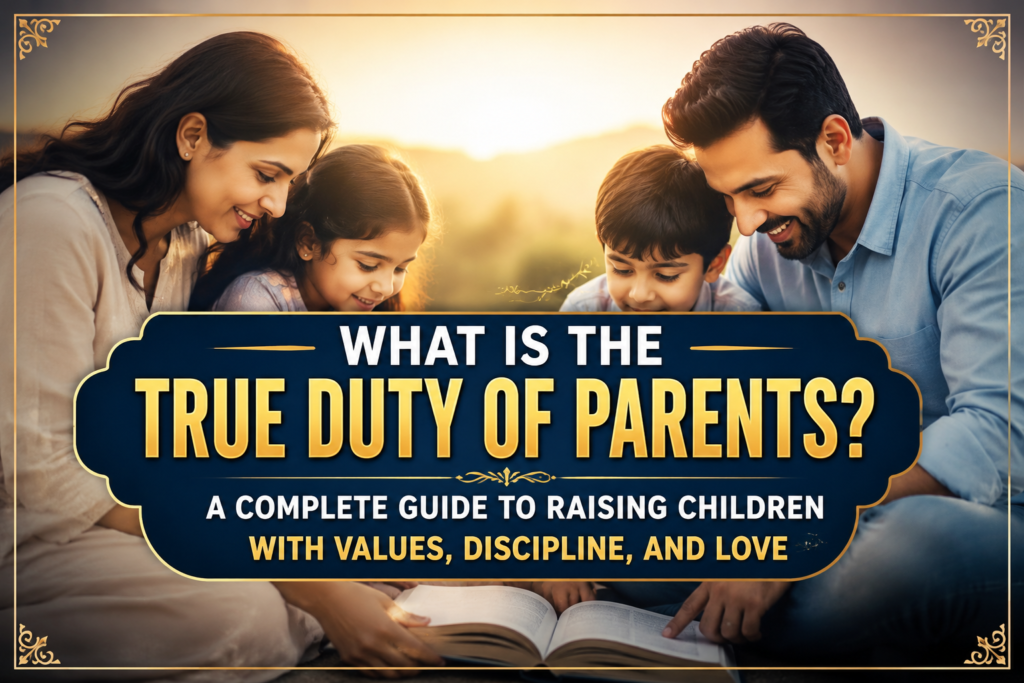
Discover the true responsibilities of mothers and fathers in raising children. Learn how parents can give the right values, discipline, education, and emotional support for a successful future.
What Is the True Duty of Parents? How Mothers and Fathers Should Raise Their Children
In today’s fast-changing world, many parents are confused about how to properly raise their children. Some believe that providing money, food, and education is enough. Others think strict discipline alone creates successful children. However, the real duty of parents is much deeper than these things.
A mother and father are the first teachers, protectors, and role models in a child’s life. The habits, values, and emotional strength that children learn at home shape their future personality. A child who receives love, discipline, respect, and guidance from parents often grows into a confident and responsible adult.
This article explains the true duty of parents, how mothers and fathers should raise their children, and what kind of values every child should learn from family life.
Why Parents Play the Most Important Role in a Child’s Life
Children are like soft clay. The way parents shape them during childhood decides how they will behave in the future. Schools can provide education, but parents build character.
Good parenting creates:
- Strong moral values
- Emotional stability
- Self-confidence
- Respect for others
- Discipline and responsibility
- Positive thinking habits
Bad parenting or lack of attention can lead to anger, disrespect, addiction, confusion, and emotional weakness in children.
That is why the responsibility of parents is not only physical care but also mental, emotional, and moral development.
The True Duty of a Mother and Father
1. Give Love and Emotional Support
The first responsibility of parents is to make children feel loved and safe. A child who grows up in a peaceful and supportive environment develops emotional strength and confidence.
Parents should:
- Listen to their children carefully
- Encourage open communication
- Avoid insulting or comparing them
- Support them during failure and success
Children who receive emotional support from parents usually become mentally strong adults.
2. Teach Discipline With Patience
Discipline is necessary for every child, but it should never become fear or violence. Many parents think shouting and punishment create obedient children. In reality, excessive anger damages a child’s confidence and trust.
Good discipline means:
- Teaching responsibility
- Setting clear rules
- Explaining right and wrong
- Correcting mistakes calmly
A disciplined child learns self-control and respect naturally.
3. Give Good Moral Values and Sanskar
The real identity of a family is seen in the values children carry into society. Parents must teach honesty, kindness, respect, and humanity from an early age.
Important values every child should learn:
- Respect for elders
- Truthfulness
- Hard work
- Gratitude
- Compassion for others
- Patience and self-control
Children learn more from watching parents than from listening to lectures. Therefore, parents must become examples of the behavior they want their children to follow.
4. Provide Proper Education and Guidance
Education is not only about school marks. Parents should guide children toward knowledge, creativity, and practical life skills.
Good parents:
- Encourage curiosity
- Help children develop talents
- Teach financial understanding
- Support career goals
- Motivate children to read and learn
Children should feel inspired, not pressured. Excessive pressure can create stress, fear, and emotional distance.
5. Protect Children From Negative Influences
Modern society exposes children to many distractions such as social media addiction, bad company, unhealthy habits, and negative online content.
Parents should:
- Monitor screen time
- Know their child’s friend circle
- Teach internet safety
- Spend quality family time
- Encourage outdoor activities and hobbies
Protection does not mean controlling every step. It means guiding children wisely so they can make good decisions independently.
The Importance of Spending Time With Children
One of the biggest mistakes modern parents make is replacing emotional presence with money and gifts. Children remember time, attention, and care more than expensive items.
Simple activities like:
- Eating together
- Talking daily
- Playing games
- Going for walks
- Sharing stories
can strengthen the parent-child relationship deeply.
A child who feels emotionally connected with parents is less likely to hide problems or develop harmful habits.
How Parents Should Handle Teenage Children
Teenage years are sensitive and challenging. During this stage, children experience emotional, physical, and mental changes. Parents must act with understanding instead of anger.
Helpful parenting tips for teenagers:
- Avoid constant criticism
- Respect their opinions
- Give controlled freedom
- Teach responsibility gradually
- Discuss problems calmly
- Build trust instead of fear
Teenagers need guidance, not domination.
Common Parenting Mistakes Parents Must Avoid
Many parents unintentionally damage their child’s confidence through unhealthy habits.
Avoid these mistakes:
- Comparing children with others
- Ignoring emotional needs
- Excessive mobile phone usage at home
- Constant shouting
- Overprotecting children
- Forcing career choices
- Lack of communication
Healthy parenting requires balance between love, discipline, freedom, and responsibility.
The Spiritual and Moral Responsibility of Parents
In many cultures and traditions, parents are considered the builders of future society. A child with strong values can positively influence generations.
Parents should teach:
- Respect for humanity
- Spiritual awareness
- Gratitude toward life
- Importance of honesty
- Value of family relationships
Children who understand ethics and compassion often become happier and more successful in life.
Final Thoughts
The true duty of parents is not limited to providing food, money, or education. The real responsibility of a mother and father is to raise children with love, discipline, wisdom, and strong values.
Children learn from the environment created at home. If parents give respect, honesty, patience, and emotional support, children naturally develop the same qualities.
Good parenting does not require perfection. It requires presence, understanding, sacrifice, and genuine care. A strong family creates strong individuals, and strong individuals build a better society.
Recommended for You : Powerful Stories That Changed the World
Follow me : Instagram Facebook Twitter linkedin Pinterest
For Know More : Parenting





4 Comments on “What Is the True Duty of Parents? A Complete Guide to Raising Children With Values, Discipline, and Love.”